 user1993
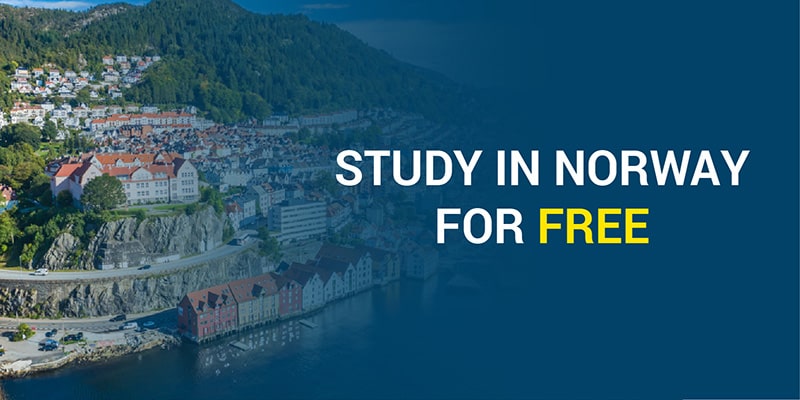
Norway is one of the world’s best-kept secrets in international higher education. While destinations like the UK, Australia, and Canada dominate the global conversation about studying abroad, Norway quietly offers something that most of those countries cannot — a world-class university education at public institutions with no tuition fees, even for international students from outside Europe. Combined with one of the highest standards of living on earth, a breathtaking natural environment, a deeply egalitarian society, and a growing number of English-taught programs, Norway deserves serious consideration from any international student weighing their options.
The country that gave the world the Nobel Peace Prize, that consistently tops global indices for democracy, human development, and gender equality, and that has built one of the most prosperous and equitable societies in history, brings those same values to its approach to higher education. Knowledge, in Norway’s worldview, is a public good — and that philosophy has real, practical consequences for international students.
This guide covers everything you need to know about studying in Norway — from understanding its higher education system and meeting admission requirements, to securing funding, managing living costs, and navigating the visa process.
Why Study in Norway?
Norway’s case as a study destination rests on several compelling and interconnected strengths.
The most immediately striking is cost. Norway’s public universities charge no tuition fees to students of any nationality — Norwegian, European, or international. This is not a recent policy or a temporary incentive — it is a deeply held principle rooted in Norway’s belief that access to education should not be determined by ability to pay. The only cost at public institutions is a small semester fee of approximately NOK 300–600 (roughly €25–55), which typically covers access to student welfare services, sports facilities, and legal aid.
Academic quality is the second argument. The University of Oslo, the University of Bergen, the Norwegian University of Science and Technology (NTNU) in Trondheim, and UiT The Arctic University of Norway are all internationally recognised research institutions. Norway is particularly strong in marine science, energy and petroleum engineering, environmental science, Arctic and polar research, fisheries, maritime studies, and the humanities. NTNU is consistently ranked among the top technical universities in Europe and is especially well-regarded in engineering, architecture, and technology.
Norway’s economy and job market add a third dimension. Norway is one of the wealthiest countries in the world, driven by its petroleum sector, maritime industries, hydropower, aquaculture, and a growing technology sector. Oslo is increasingly positioning itself as a Nordic tech hub, with a thriving startup ecosystem and strong representation from global companies. For graduates in engineering, technology, business, and the sciences, Norway offers genuine employment prospects in a high-wage economy.
The quality of life argument is almost unfair. Norway’s combination of stunning natural landscapes — fjords, mountains, the Northern Lights, the midnight sun — with safe, functional, and culturally rich cities creates a living environment that is hard to rival anywhere in the world. Norwegians have a concept — friluftsliv, meaning open-air living — that describes a deep cultural relationship with nature that permeates daily life. As a student in Norway, you are not merely studying in a beautiful country — you are immersed in a culture that genuinely values time outdoors, balance, and wellbeing.
Types of Institutions in Norway
Norway’s higher education system is compact, publicly funded, and quality-assured through NOKUT — the Norwegian Agency for Quality Assurance in Education.
Universities (Universiteter) are research-intensive institutions offering the full range of bachelor’s, master’s, and doctoral programs. Norway has ten universities, of which the University of Oslo and the University of Bergen are the oldest and most comprehensive. NTNU in Trondheim is the largest and the primary institution for engineering and technical education. UiT The Arctic University of Norway, based in Tromsø, is the world’s northernmost university and a global leader in Arctic research.
University Colleges (Høgskoler) offer more practically oriented programs across fields like teacher education, nursing, social work, engineering, and business. They award bachelor’s and master’s degrees and are closely connected to regional industries and public services. Several Norwegian university colleges have recently merged with or been upgraded to universities.
Specialised University Institutions include institutions such as the Norwegian School of Economics (NHH) in Bergen — one of Scandinavia’s top business schools — the Norwegian School of Sport Sciences, the Oslo National Academy of the Arts, and the Norwegian Academy of Music. These institutions offer programs in specific fields at the highest academic level.
Private Institutions also exist in Norway, of which BI Norwegian Business School is the most prominent — one of the largest and most respected business schools in Europe, with campuses in Oslo, Bergen, Stavanger, and Trondheim. Private institutions do charge tuition fees, which vary by program.
Admission Requirements
Undergraduate Admissions
Norwegian undergraduate programs assess international students on the equivalence of their secondary school qualifications to Norwegian standards. The key concept is generell studiekompetanse — general study competence — which is Norway’s equivalent of the secondary school leaving qualification required for university entrance.
Most strong secondary school qualifications from around the world — including the International Baccalaureate, A-levels, the American high school diploma with sufficient SAT scores, and many national secondary certificates — are accepted as equivalent. The GSU list (Generell studiekompetanse for utenlandske søkere) maintained by Norwegian universities provides country-by-country guidance on which qualifications are accepted and at what grade levels.
Students whose qualifications are not fully equivalent may be required to complete additional preparatory coursework or a foundation program before entering a bachelor’s degree.
English language requirements for programs taught in English typically include a minimum IELTS score of 6.0–6.5 overall, or equivalent TOEFL iBT scores of 80–90. For programs taught in Norwegian, proof of Norwegian language proficiency is required — typically the Bergenstesten or Norwegian language test (Test i norsk — høyere nivå) at a B2 level minimum. Students planning to study in Norwegian must invest seriously in language preparation before applying.
Graduate Admissions
For master’s programs, a relevant bachelor’s degree with strong academic results is the primary requirement — typically equivalent to a Norwegian grade of C or better on the ECTS scale. For research-intensive programs and doctoral applications, supervisory fit and the quality of the research proposal are equally important.
Standard application documents for graduate programs include academic transcripts, a motivation letter, letters of recommendation, a CV, and language proficiency certificates. Doctoral applications additionally require a detailed research proposal and, ideally, prior contact with a potential supervisor.
Application Process and Timeline
Norway does not have a single centralised application portal for all students. The process differs depending on your level of study and whether you are applying to a university or a specialised institution.
For undergraduate programs, applications from international students are submitted through Samordna opptak — the Norwegian Universities and Colleges Admission Service — or directly through individual institutions, depending on whether the institution participates in the centralised system. The application deadline for most programs is typically March 1 for admission in the following August/September academic year. Some programs have earlier deadlines, and scholarship applications are always earlier still.
For master’s programs, applications go directly to individual universities through their own online portals. Deadlines vary widely — typically between December 1 and April 1 for September entry. Programs with limited places tend to have earlier deadlines.
For doctoral programs, there is no fixed application round. PhD positions in Norway are typically advertised as job vacancies — because Norwegian doctoral candidates are employed by the university, funded through the Research Council of Norway or other grants, and receive a salary rather than a stipend. Positions are advertised on Jobbnorge.no — Norway’s public sector job portal — and on individual university websites. Checking these portals regularly and applying to advertised positions is the most reliable route into a Norwegian PhD.
Scholarships for International Students
While Norway’s absence of tuition fees dramatically reduces the financial barrier to studying there, living costs remain high, and scholarships can make the difference between a comfortable and a strained experience.
Quota Scheme — Now Replaced by NORPART
Norway historically ran a Quota Scheme that provided full scholarships for students from developing countries and Central and Eastern Europe. This scheme was discontinued and replaced by the Norwegian Partnership Programme for Global Academic Cooperation (NORPART), which funds institutional partnerships between Norwegian universities and institutions in Asia, Africa, and Latin America, facilitating student and staff exchanges rather than individual scholarships.
Erasmus+ and Nordplus
Norway participates fully in Erasmus+ — the EU’s education exchange program — despite not being an EU member state. Students from partner institutions in Erasmus+ countries can access funding for exchange study in Norway through their home institution. The Nordplus program specifically connects Norway with Denmark, Sweden, Finland, Iceland, the Faroe Islands, Greenland, and the Baltic states for academic exchange at all levels.
Research Council of Norway Doctoral Positions
As noted, most Norwegian doctoral candidates are employed on funded positions paid for through the Research Council of Norway or through university faculty grants. These positions — advertised openly on Jobbnorge.no — carry a full salary (typically NOK 490,000–545,000 per year gross, equivalent to approximately €43,000–48,000), full social security benefits, parental leave rights, and pension contributions. For doctoral study, Norway’s employment model is one of the most financially supportive in the world.
University-Specific Scholarships
Individual Norwegian universities offer a limited number of scholarships for international students, primarily at master’s level. The University of Oslo, NTNU, and the University of Bergen all maintain scholarship pages with awards for international students — typically providing NOK 8,000–10,000 per month in living support. These awards are competitive and often tied to specific faculties or research areas.
Lånekassen — Norwegian State Educational Loan Fund
The Lånekassen is Norway’s state student loan and grant scheme. It is primarily designed for Norwegian citizens and residents, but international students who have been residing legally in Norway for at least three years before commencing their studies may become eligible for Lånekassen support. The conditions are specific and worth investigating if you already have ties to Norway.
Financial Aid and Living Costs
Living Costs
Norway is among the most expensive countries in the world to live in, and prospective students must budget carefully. Monthly living costs in Norway typically range from NOK 12,000 to NOK 16,000 (approximately €1,050–1,400) — covering accommodation, food, transport, books, and personal expenses.
Accommodation is the largest cost. Student housing through the Studentsamskipnad (student welfare organisations) at each university is the most affordable option, typically ranging from NOK 3,500–6,500 per month depending on city and room type. Demand for student housing significantly exceeds supply in Oslo and Bergen, and applying for student housing as early as possible — ideally immediately upon receiving your admission offer — is essential. Private market rentals in Oslo range from NOK 8,000–14,000 per month for a single room or small apartment.
Food costs can be managed through cooking at home — Norwegian supermarkets like Rema 1000, Kiwi, and Extra offer budget options — though eating out in Norway is genuinely expensive by any international standard.
Part-Time Work
International students in Norway on a student residence permit are entitled to work part-time while studying. Students from countries outside the EU/EEA can work up to 20 hours per week during term time without needing a separate work permit. Norway’s minimum wage varies by sector but is consistently high — typically above NOK 180–200 per hour in most industries — making even modest part-time work a meaningful contribution to living costs. The hospitality, retail, and care sectors are common sources of student employment.
Student Discounts and Welfare
Norwegian students benefit extensively from the Studentsamskipnad system — student welfare organisations at each university that offer subsidised housing, affordable canteens (student restaurants with meals for NOK 50–80), healthcare, dental care, psychological counselling, sports facilities, and cultural events. Registering with your university’s Studentsamskipnad on arrival is one of the most impactful steps you can take to reduce living costs.
The Studentkortet (Student Card) provides discounts across public transport, cultural institutions, cinemas, and some retail. Oslo’s public transport system — buses, trams, metro, and ferry — offers a monthly student pass at a discounted rate.
The Student Visa — Residence Permit for Students
Citizens of Nordic countries (Denmark, Sweden, Finland, Iceland) and EU/EEA nationals do not need a visa or residence permit to study in Norway. For students from all other countries, a Residence Permit for Studies is required.
Step 1 — Receive Your Admission Letter
A formal letter of admission from a Norwegian institution is required before applying for a residence permit. This letter confirms your enrollment in a full-time program of study.
Step 2 — Apply Through the UDI Portal
Applications for Norwegian residence permits are submitted through the Directorate of Immigration (UDI) — the Norwegian immigration authority — via its online application portal (udi.no). Most applicants apply online, though some nationalities may be required to submit a paper application at the Norwegian Embassy.
Step 3 — Gather Your Documents
Core documents required include a valid passport, admission letter from your Norwegian institution, proof of financial means demonstrating sufficient funds to cover living costs for the duration of your stay (approximately NOK 131,124 per year — roughly €11,500 — as the current financial requirement), proof of accommodation in Norway, and the residence permit application fee (currently NOK 5,900 — approximately €520).
For doctoral students employed on university contracts, the employment contract itself serves as proof of financial means, and the process is considerably smoother.
Step 4 — Biometrics and Processing
Most applicants must provide biometric data — fingerprints and a facial photograph — at a Norwegian Embassy or approved service point in their home country. Processing times vary by country but typically range from four to twelve weeks. Applying several months before your intended start date is strongly advised.
Conditions and Renewal
Your residence permit is granted for the duration of your program and specifies your right to work part-time. It must be renewed if your studies are extended. You must register with the Norwegian Population Register and obtain a Norwegian personal identity number (personnummer) within the first weeks of arrival — this number is essential for opening a bank account, accessing healthcare, and most administrative functions.
Post-Study Work and Pathways to Residence
After completing a degree in Norway, international graduates can apply for a Job Seeker’s Permit — a residence permit valid for one year that allows you to remain in Norway and seek employment. During this period, you can work full-time while searching for a position aligned with your qualifications.
Norway faces genuine skill shortages across engineering, technology, healthcare, and maritime sectors, and the government’s immigration policy reflects a strong interest in retaining skilled graduates. Once you secure a skilled job offer, you can apply for a Skilled Worker Residence Permit, which is renewable and can ultimately lead to permanent residence after three years of continuous skilled employment in Norway.
After seven years of lawful residence in Norway, you may be eligible to apply for Norwegian citizenship, which carries the right of residence and work across all Nordic countries under the Helsinki Convention.
Learning Norwegian — How Important Is It?
For students enrolled in English-taught programs — which are widely available, particularly at master’s level — Norwegian is not required academically. However, learning Norwegian transforms your experience of living in the country and significantly improves your employment prospects after graduation.
Norwegian is genuinely one of the more accessible languages for English speakers to learn, sharing substantial Germanic roots and a relatively straightforward grammar. Most universities offer free or subsidised Norwegian language courses for international students, and investing in at least basic Norwegian — enough to navigate daily life, interact with neighbours, and demonstrate commitment to the country — is time well spent.
Final Tips
Apply for student housing the moment you receive your admission offer. In Oslo and Bergen particularly, the student housing waitlists are long, and arriving without secured accommodation in a high-cost city is a genuinely stressful situation to avoid.
For doctoral study, monitor Jobbnorge.no regularly and apply to funded positions in your field as they are advertised. A Norwegian PhD is not just an academic qualification — it is a three to four year employment contract with a full salary, social benefits, and pension rights. Treating the application as a job application — with a well-crafted cover letter, a strong CV, and a targeted research proposal — is the right approach.
Embrace friluftsliv. The students who get the most out of Norway are those who engage with its outdoor culture — who put on waterproof boots and go hiking in October, who learn to ski through a Norwegian winter, who take the ferry across the fjord on a summer evening. Norway’s natural environment is not background scenery — it is part of the education.
Norway offers something rare in global higher education — the genuine combination of zero tuition fees, world-class academic quality, a high standard of living, and a society that values education, equality, and the natural world in equal measure. It is an extraordinary place to study, grow, and begin building a global life.

 user1993